How Do You Find a Reliable Eyewear Manufacturer for Your Brand?
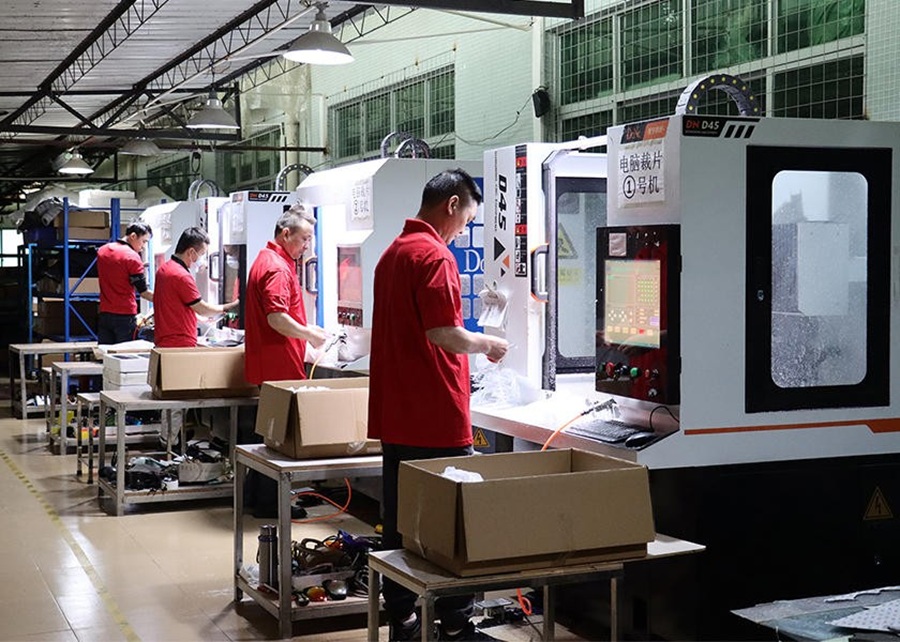
Finding a manufacturer feels overwhelming, and a bad choice can sink your brand. We’ll show you how to find a true partner who will help you succeed.
The best way to find a reliable eyewear manufacturer is to seek a strategic partner, not just a supplier. Prioritize manufacturers with certified quality systems (CE, FDA), transparent communication, and a collaborative approach that treats your brand’s success as their own. This partnership is your foundation.
Finding the right manufacturing partner is one of the most important decisions you’ll ever make. It’s about more than just production; it’s about finding a team that will become an extension of your own. As a manufacturer with decades of experience, we’ve seen brands flourish and falter based on this single choice. You aren’t just looking for a factory; you are looking for a co-founder for your product. Let’s walk through exactly how to find a partner who will help you build a resilient and successful eyewear brand.
Where Should I Even Begin My Search for Eyewear Manufacturers?
Drowning in endless search results and unqualified leads? Wasting time on factories that don’t fit your brand is frustrating. Use our insider methods to find the right partners.
Go beyond basic Google and Alibaba searches. Start by analyzing competitor products to identify key manufacturing regions. Then, strategically attend major trade shows like SILMO (Paris) and MIDO (Milan), and use professional networks like LinkedIn to connect directly with key decision-makers.

The first step can feel like shouting into the void. While search engines and large B2B platforms are a starting point, they are crowded and it’s hard to tell who is truly qualified. We see new brand owners spend months vetting the wrong factories. Let’s refine your approach.
The Professional’s Search Strategy
-
Reverse-Engineer Your Favorites: Look at the independent brands you admire. Find their products and check the inside of the temple. Where does it say "Made In"? China, Italy, Japan? This immediately tells you which manufacturing regions specialize in the quality and style you’re after. It’s a simple trick that narrows your search from global to regional.
-
Use Trade Shows Wisely: Don’t just wander the aisles at major shows like SILMO or MIDO. The real work happens before you go. Get the exhibitor list, study the manufacturers, and see who aligns with your brand. Book meetings in advance and arrive with a specific list of questions. This shows you are serious and professional.
-
Connect Directly: Use platforms like LinkedIn to bypass the general inquiry inbox. Search for the "Sales Director" or "Head of Product Development" at a manufacturing company you’ve identified. A personalized message explaining your brand vision is far more effective than a generic email.
What Truly Defines a "Reliable" Eyewear Manufacturing Partner?
Thinking "reliable" just means on-time delivery and low prices? This common mistake overlooks the critical qualities that define a true partnership and can lead to costly problems down the line.
A truly reliable partner is built on three pillars: a foundation of production capability (certifications like ISO, CE, FDA), a core of excellent communication and proactive project management, and a strategic alignment with your brand’s long-term goals and vision.

Over the years, we’ve learned that reliability is a multi-layered concept. The cheapest price or the fastest promise often hides deep-seated issues. A brand’s survival depends on a partner who delivers on much more than just the product. We’ve built our reputation on what we call the "Three-Tier Reliability Model."
Our Three-Tier Reliability Model
-
Tier 1: The Foundation – Production Strength: This is the non-negotiable base. Does the factory have modern equipment? Do they hold essential quality certifications like ISO 9001? Are they compliant with market standards like CE and FDA? This is the ticket to entry. Without it, nothing else matters.
-
Tier 2: The Core – Proactive Communication: This is where most partnerships fail or succeed. A reliable partner doesn’t just wait for instructions. I remember a client sent us a design for a beautiful, thin metal frame. We knew from experience that the hinge point was a potential weakness. A passive factory would make the flawed sample. We instead created a 3D-printed prototype1 of a slightly reinforced design and explained how this small change would drastically improve durability without sacrificing the aesthetic. That is the difference between an order-taker and a partner.
-
Tier 3: The Peak – Strategic Alignment: The best partners think like you do. They understand your brand’s place in the market. They proactively share information on new sustainable materials, like bio-acetate, or new techniques that could give you a competitive edge. They are invested in your success because your growth is their growth.
OEM vs. ODM vs. Private Label: Which Manufacturing Model Is Right for My Brand?
Confused by industry jargon like OEM, ODM, and Private Label? Choosing the wrong manufacturing model can waste your time, drain your budget, and even compromise your brand’s identity.
OEM (Original Equipment Manufacturing) is for when you have a unique design. ODM (Original Design Manufacturing) is when you customize a manufacturer’s existing style. Private Label is simply adding your logo to a manufacturer’s ready-made stock frames.
Choosing the right manufacturing path is critical for your budget, timeline, and brand control. Let’s break down these terms with simple analogies to make the choice clear.
-
OEM: You’re the Architect. You provide the complete, detailed blueprints (your unique design files). The manufacturer is the expert construction team, building your vision exactly to spec. This model offers full creative control and unique intellectual property (IP), but requires design expertise and higher investment.
-
ODM: You’re the Homebuyer. The manufacturer is a property developer with a portfolio of well-designed house models (their catalog of frame styles). You choose a model you like and then customize the "interior design"—the colors, materials, and finishes. You get to market faster with a proven design.
-
Private Label: The Turnkey Solution. This is the simplest form of ODM. The manufacturer has existing inventory (stock styles). You simply choose from what’s available and they print your logo on it. It’s the fastest and requires the lowest initial quantity.
Here is a simple table to help you decide:
| Feature | OEM (Full Custom) | ODM (Customized) | Private Label (Stock) |
|---|---|---|---|
| Design Control | Total | Limited to Colors/Finish | None |
| Speed to Market | Slowest | Medium | Fastest |
| Initial Cost | Highest (Tooling) | Medium (No Tooling) | Lowest |
| IP Ownership | You Own the Design | Manufacturer Owns It | Manufacturer Owns It |
| Best For | Established Brands | Startups with Vision | Quick Market Entry |
What Key Materials and Production Techniques Should I Be Aware Of?
To an untrained eye, all frames can look similar. If you can’t tell the difference between high-quality and low-quality work, you risk paying a premium for a subpar product.
Focus on premium materials like Italian Mazzucchelli acetate for its rich colors or Japanese titanium for its lightweight strength. Key production techniques that signal quality include multi-stage hand polishing for a deep luster and IP plating for durable, vibrant colors, which are far superior to spray paint.
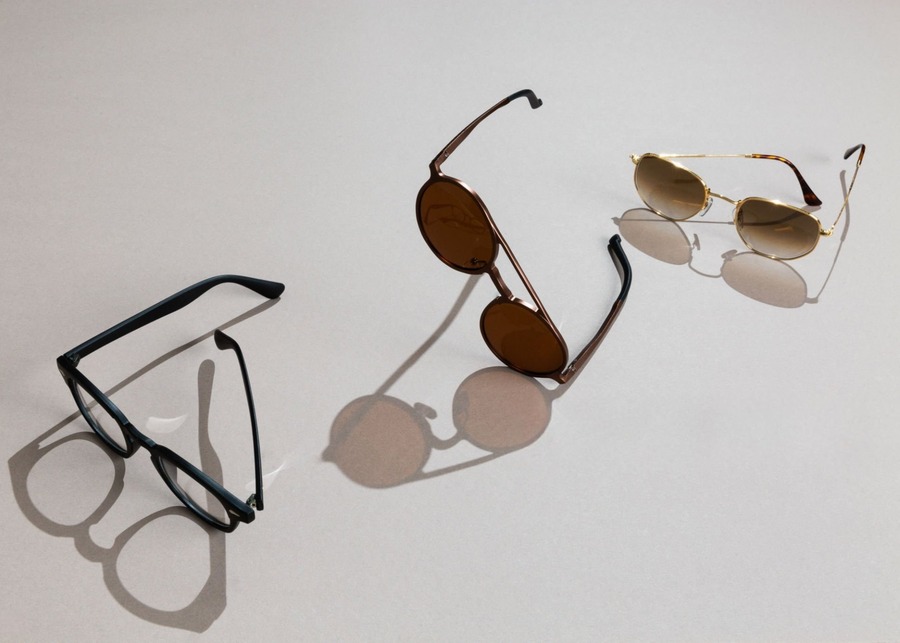
The materials and techniques used to make your frames are the silent storytellers of your brand’s quality. When you can speak this language, you can properly judge a manufacturer’s capabilities.
Materials That Define Quality
- Acetate: Don’t just ask for "acetate." Ask if they use premium blocks from sources like Italy’s Mazzucchelli. The difference in color depth, pattern richness, and durability is immediately obvious compared to standard acetate.
- Metal: There’s a world of difference between standard stainless steel and pure titanium. Titanium is incredibly lightweight, strong, and hypoallergenic, making it a true premium material. Beta-titanium offers amazing flexibility, perfect for durable, comfortable temples.
- TR90: This is a high-performance polymer known for its incredible flexibility and durability. It’s a fantastic choice for sport or children’s eyewear.
Craftsmanship You Can See and Feel
- Hand Polishing vs. Tumble Polishing: Tumble polishing is fast and cheap, but it can round off sharp design details and produces a duller shine. Multi-stage hand polishing is labor-intensive but results in a deep, liquid-like luster and perfectly crisp edges. Ask to see examples of both.
- IP Plating vs. Spray Painting: Low-cost frames are often just spray-painted, which can easily chip and fade. Ion Plating (IP) is a process that fuses the color to the metal on a molecular level. It’s vastly more durable and allows for richer, more consistent colors.
What Critical Questions Must I Ask a Potential Eyewear Manufacturer?
Walking into a discussion unprepared is a big mistake. Asking generic questions gets you generic answers, leaving you unable to truly evaluate a potential partner for your brand.
Go beyond price and lead time. Ask about their process for protecting your intellectual property (IP), the technical background of your day-to-day contact, and how they communicate and resolve production delays. These questions reveal their true professionalism and reliability.

Your goal is to understand their process, their values, and how they handle problems. We respect clients who ask tough, specific questions because it shows they are serious about quality. Here is a list of questions we believe every brand owner should ask.
The Essential Vetting Checklist
- Intellectual Property: "What is your specific process for ensuring my designs remain confidential and are not shared with other clients?" A good partner will have clear non-disclosure agreements (NDAs) and internal controls.
- Project Management: "Who will be my daily point of contact, and what is their technical background?" You need to work with someone who understands eyewear construction, not just a salesperson.
- Problem Solving: "Can you describe a time a project faced an unexpected delay? How did you communicate this to the client and what steps did you take to resolve it?" This question reveals their transparency and sense of responsibility.
- Experience & Fit: "Can you share examples of other brands you have worked with that have a similar quality standard or brand positioning to mine?" While they may not name names due to NDAs, they should be able to describe the type of work they do that aligns with your needs.
- Quality Control: "What are the specific quality control checkpoints in your production line, from raw materials to final packing?"
How Can I Evaluate Their Sample and Prototyping Process Effectively?
The sample has arrived, and it looks good at first glance. But missing a subtle flaw at this stage can lead to a disastrous bulk production run, costing you thousands.
Evaluate samples with a QC inspector’s eye. Check for perfect structural symmetry, smooth hinge operation, and seamless finishing at the joints. Most importantly, use digital calipers to compare every single dimension, angle, and curve against your original technical drawings (CAD files).
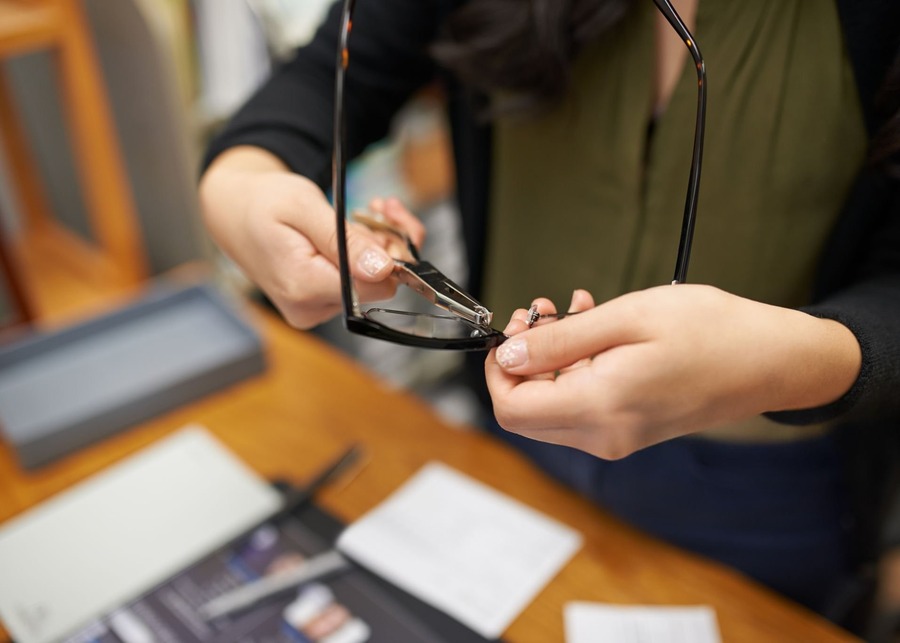
The sample is the single most important indicator of a manufacturer’s capabilities. It is their promise of what they can deliver at scale. Do not approve it until it is perfect. Here’s a checklist to guide your evaluation.
The Professional Sample Review Checklist
- The Table Test: Place the frame on a flat surface. Do both temples rest evenly? Does the frame front sit flat without rocking? This simple test immediately reveals any warping or asymmetry.
- Structural Integrity: Open and close the temples. Is the hinge movement smooth and firm, not loose or gritty? Are the screws tight? Check the joint where the temples meet the frame front—it should be seamless.
- Surface Finish: Look at the frame under a bright light. Is the polish consistent, even in the small corners around the nose pads and hinges? Is the color of the plating even, with no light or dark spots? Is the logo printing crisp, clear, and centered?
- Fidelity to Design: This is the most critical step. Do not just eyeball it. Use digital calipers to measure the lens width, bridge width, temple length, and frame height. Compare these measurements directly to your technical drawings. Even a 1mm deviation can change the entire fit and feel.
Understanding MOQs: What’s a Realistic Minimum Order Quantity for a New Brand?
The fear of high Minimum Order Quantities (MOQs) can stop a new brand in its tracks. You’re worried about investing too much capital in inventory before you’ve even tested the market.
A typical MOQ for a fully custom (OEM) design is around 300-500 units per color. For a much lower MOQ of 50-100 units, ask manufacturers about their "stock styles" (Private Label) or using their existing "open molds" with your custom colors.
First, let us be transparent about why MOQs exist. It’s not an arbitrary number. Raw materials like acetate and metal are purchased in large sheets or batches. Setting up CNC machines and injection molds has a fixed cost. A certain volume is needed to make production efficient and cover these fundamental costs. A good partner will be open about this.
However, a great partner will also work with you to find a solution. Here is the typical "ladder" of options we offer to new brands:
Finding an MOQ That Works for You
- Lowest MOQ (50-100 units/style): Stock Styles. This is a Private Label approach. You choose from our curated collection of ready-made, high-quality frames that are already in stock. We simply add your logo. It’s the fastest and most capital-efficient way to launch.
- Flexible MOQ (~300 units/style): Open Molds. This is an ODM approach. You use our existing, pre-made tooling for a frame shape you like, but you get to customize the colors and finishes. This saves you the high cost of creating a new mold.
- Standard MOQ (500+ units/style): Full Custom. This is the OEM model where we create brand-new tooling just for your unique design. It has the highest MOQ because the initial development and tooling costs are significant.
Our advice to new brands is always the same: start smart. Pick two or three core styles using an ODM or Private Label approach to test the market. Once you have sales data and proof of concept, then invest in a fully custom design.
What Are the Major Red Flags to Watch Out for When Choosing a Supplier?
A potential manufacturer’s website looks professional and their initial emails are friendly. But hidden red flags can signal a future of missed deadlines, poor quality, and constant frustration.
The biggest red flags are not always obvious. Watch for consistently slow or vague communication, a price that is dramatically lower than all other quotes, and a general lack of transparency about their factory or processes. These are signs of future problems.
After decades in this business, we can spot warning signs from a mile away. Often, it’s the subtle things that tell you the most about a potential partner. Here are the red flags that should make you pause.
The Subtle Warning Signs
- Communication Red Flags: They take days to reply to a simple question. When you ask a technical question, their answer is vague or they change the subject. The salesperson promises you everything ("Yes, we can do that for the lowest price!") without consulting their production team.
- Pricing Red Flags: If one quote is 30% cheaper than all the others, it’s not a bargain—it’s a warning. It almost always means they will cut corners on materials, polishing, plating, or quality control. You will pay for it later.
- Transparency Red Flags: They are hesitant to provide their full factory address. They make excuses when you ask for a virtual factory tour. The beautiful sample they sent you looks nothing like the photos of their "mass production" on their website.
- Attitude Red Flags: They seem impatient with your questions or dismissive of your "small" initial order. A true partner will be excited about your potential and treat you with respect, regardless of your size. They see a future, not just a transaction.
Beyond Production: What Kind of Long-Term Support Should I Expect?
You think the partnership is established once the first order is in production. This short-sighted view misses out on the immense value that a true strategic partner can provide for your brand’s future.
A great partner supports you long after production. Expect proactive product development ideas, insights into new trends and materials, flexible re-ordering policies, logistics support, and a clear, fair after-sales service and warranty policy.
The relationship shouldn’t end when the boxes leave our factory. The goal is to grow together. A manufacturer focused only on the current order is thinking too small. We believe our job is to help you build your brand for years to come.
What True Long-Term Partnership Looks Like
- Proactive Product Development: We don’t wait for you to bring us ideas. We actively share reports on the latest color trends from Paris, new sustainable materials we’re testing, and innovative hinge technology that could set your next collection apart.
- Supply Chain Management: What happens when a style sells out faster than expected? A good partner will have a flexible re-ordering process to help you restock quickly. We also work with our clients to optimize their packaging and shipping to reduce their overall logistics costs.
- Marketing & Sales Support: Your success is our success. We can provide high-quality, professional product photos and videos that your marketing team can use immediately, helping you launch faster and look more professional.
- After-Sales Guarantee: Every partnership needs a clear understanding of what happens if something goes wrong. We have a transparent process for handling any manufacturing defects and a clear warranty policy that gives you and your customers peace of mind.
A good manufacturer produces your product. A great partner helps you build your brand.
Conclusion
Finding the right manufacturer is about building a strategic partnership. Focus on communication, proven quality, and a shared vision to create a successful eyewear brand that is built to last.
-
Explore how 3D-printed prototypes accelerate design validation and reduce risk, leading to quicker, more cost-efficient eyewear product development. ↩